
TLDR
Logan is best understood as the university and service center of Cache Valley, not as a smaller extension of the Wasatch Front. Utah State University gives it college-town energy, while separate neighboring communities, visible agricultural land, the Logan River, and quick access to Logan Canyon give the area a distinctly valley-centered structure. Growth is changing the region, but housing conditions, commutes, and amenities vary enough that newcomers should compare Logan with nearby towns in person.
If you are asking what is logan utah like, the short answer is: it is a growing northern Utah city with a major university, a regional role larger than its population might suggest, and unusually close contact with mountains, water, farms, and smaller municipalities. It offers more services and activity than a typical rural town, but it does not provide the employment depth, transportation network, or year-round urban range of the Wasatch Front.
What is Logan, Utah like in practical terms?
Logan sits at the center of daily life in Cache Valley. People come into the city for education, employment, medical and professional services, shopping, dining, and events, while housing and family routines extend across multiple nearby municipalities. That makes the area feel regional even when individual trips are relatively short.
The scale is important. The U.S. Census Bureau estimated Logan’s population at 55,576 on July 1, 2025, compared with 145,000 for all of Cache County. Those estimates represented growth of 5.2% in the city and 8.9% countywide from the April 2020 estimate base. Logan is clearly the main city, but most county residents live outside its boundaries.
That pattern helps explain why a newcomer should evaluate “Logan” at two levels. One is Logan proper, including the university and the city’s central services. The other is the broader valley, where communities such as North Logan, Providence, River Heights, Smithfield, Hyde Park, and Hyrum may enter decisions about housing, schools, errands, and commuting. Cache County’s own planning work describes the region as a valley of communities and emphasizes coordination across municipal boundaries.
Why Cache Valley feels different from the Wasatch Front
The Wasatch Front operates as a long metropolitan corridor. Cities and suburbs connect into a larger labor, housing, and transportation market, even though local identities remain strong. Regional infrastructure such as FrontRunner reinforces those connections; our explanation of FrontRunner and Wasatch Front development shows how transit, zoning, and local access interact along that corridor.
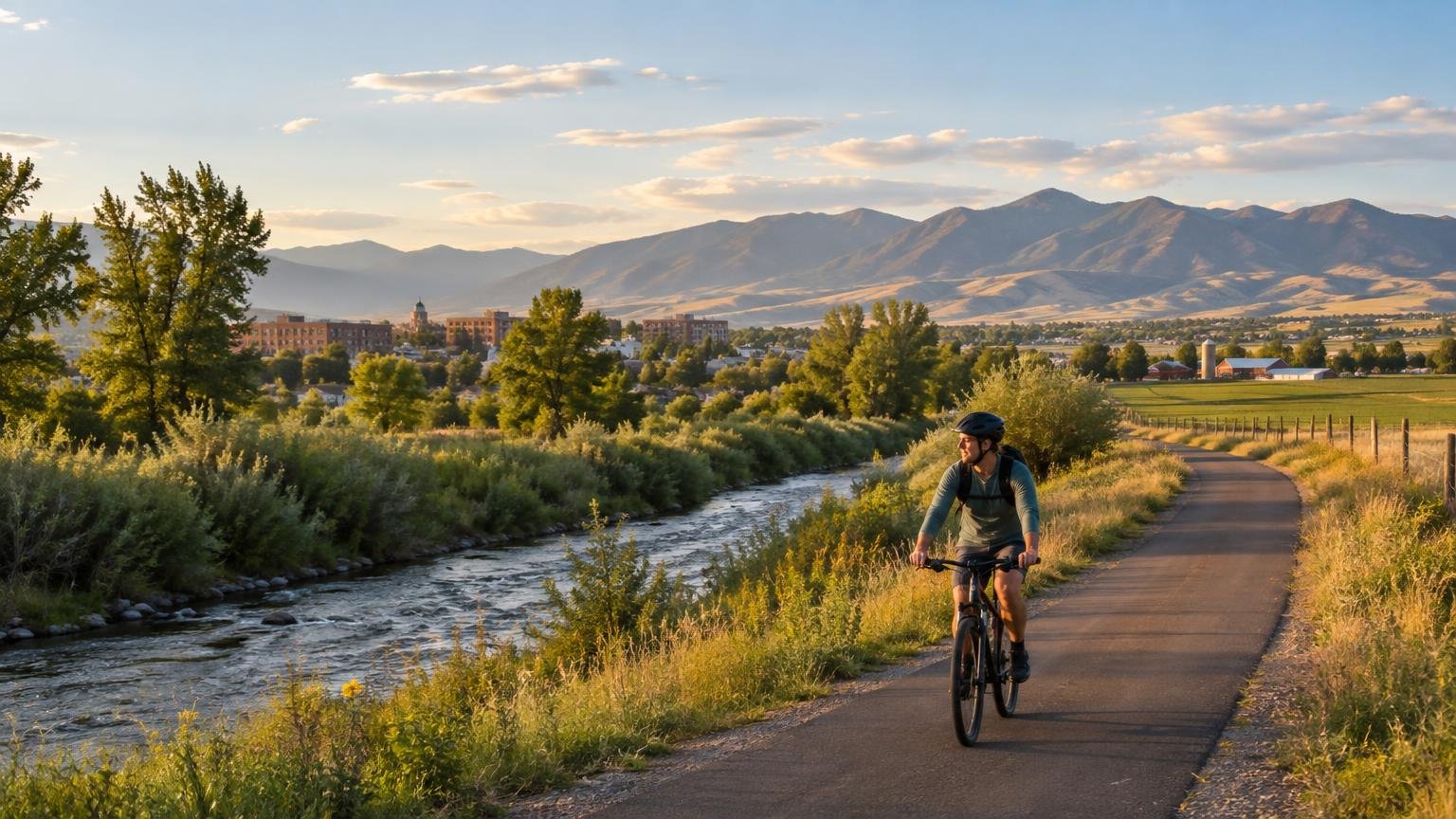
Cache Valley has a different physical and civic structure. Logan is the dominant center, but it shares the valley with separate towns, unincorporated land, agricultural uses, waterways, and mountain edges that remain easy to see. Development has not erased the underlying landscape from everyday view.
The distinction is not simply “urban versus rural.” Logan has a university, substantial regional services, new construction, traffic, and growth pressures. Cache Valley also has working land and smaller communities near the regional center. That mixture—not an absence of development—is what makes the place feel different.
Distance reinforces the separation. Utah State University places Logan about 81 miles northeast of Salt Lake City. That is close enough for an occasional airport trip, event, appointment, or day in the capital, but far enough that most people will not treat Salt Lake City as an effortless extension of daily life. Visitors planning a longer Utah itinerary can still consider Logan alongside other day trips and regional drives from Salt Lake City, but winter weather, canyon travel, and the total return drive deserve attention.
A university city with a valley-wide role
Utah State University is central to Logan’s identity. Founded on March 8, 1888, USU now describes itself as an R1 public land-grant university, with its main campus in Logan. Its 2025 Fast Facts reports 28,900 students and 11,438 employees across the university’s entire statewide system—not solely at the Logan campus.
Even with that systemwide caveat, the main campus materially shapes Logan. Academic calendars affect activity. Students, faculty, research, athletics, lectures, and cultural programs add a layer that a similarly sized regional city might not have. At the same time, Logan is not only a college town: it serves families, surrounding agricultural communities, established employers, and residents whose lives have little direct connection to USU.
A useful description is “small regional city with a major university.” Calling Logan only a college town understates its service role. Calling it a conventional suburb misses the fact that it anchors a separate valley rather than blending directly into the Salt Lake metropolitan corridor.
The river and canyon are part of the city’s structure
Logan Canyon is not just scenery for weekend recreation. USU says it is only minutes from campus, and the canyon creates a direct transition between the city and the Bear River Mountains. That proximity makes hiking, fishing, scenic driving, and winter outings accessible, but the canyon also carries transportation, water, habitat, and seasonal-management considerations.
The Logan River begins in the Bear River Mountains, passes through Logan Canyon, and continues toward Cutler Reservoir. According to USU Extension’s overview of the Logan River, the river has supported settlement, irrigation, hydropower, research, recreation, and wildlife habitat. Development also altered and channelized sections of it, while changing snowpack and warmer water create continuing ecological concerns.
This history predates modern Logan. USU Extension describes long human use of the river area, including by Shoshone communities. It identifies the 1855 arrival of Mormon settlers as a major turning point in irrigation-related alteration and development. The result is a landscape where natural systems and built infrastructure are tightly connected rather than cleanly separated.
For residents, that connection has practical consequences. Mountain access is close, but canyon roads and trail conditions can change with snow, storms, construction, wildfire, or runoff. Visitors should check live road and recreation information rather than assuming conditions in Logan match those in Salt Lake City or elsewhere in Utah.
Growth is visible, but the tradeoffs are still unfolding
Logan and Cache County are growing, and countywide growth has recently outpaced the city’s rate. Cache County issued 1,112 building permits in 2025, another indication of continued construction and development activity. A permit count does not reveal what was built in each municipality or whether supply meets local demand, but it confirms that growth is not an abstract future issue.
Local planning documents show what officials are trying to balance. Cache County’s comprehensive plan update was adopted on February 28, 2023. The Envision Cache Valley framework calls for concentrating future growth in existing communities while protecting water quality, clean air, scenic character, wildlife, agriculture, and recreation. Those are stated goals, not proof that every project or policy has achieved them.
The pressure is easy to understand. Development within existing communities can reduce outward land consumption, but it may also bring denser housing, more traffic, changing neighborhood form, and demand for additional infrastructure. Spreading development across open land can preserve lower densities in some places while consuming more agricultural or scenic space. Cache Valley’s defining landscape is also the ground on which new homes, businesses, and roads must compete for room.
What the housing and commute numbers do—and do not—show
| Countywide Census measure | 2020–2024 estimate | How to use it |
|---|---|---|
| Median value of owner-occupied housing units | $444,400 | A broad county benchmark, not a current asking price or Logan neighborhood estimate |
| Median gross rent | $1,213 | Historical countywide context, not a live quote for an available unit |
| Mean travel time to work | 17.7 minutes | A county average, not a promise for a particular route or time of day |
These Census estimates provide useful context for Cache County, but they should not be treated as a current housing-market report. They combine multiple years, cover the entire county, and cannot tell a renter or buyer what is available now in Logan, North Logan, Providence, or another community.
The same caution applies to commuting. A 17.7-minute countywide mean suggests that Cache County does not function like a major metropolitan commute market overall, but an average cannot account for a specific employer, school schedule, winter storm, construction project, or recurring bottleneck. Anyone considering a move should drive the actual route during the hours they expect to use it.
Who is likely to enjoy living in Logan?
Logan may fit people who value a university presence, regional services, nearby mountain access, and a city that still has a visible relationship with farms, rivers, and separate small communities. It may also appeal to households that want northern Utah access without living inside the continuous Wasatch Front corridor.
The tradeoffs become clearer for people who need a deep metropolitan job market, frequent access to a major airport, dense public transportation, or a broad range of big-city amenities every day. Logan has employers and services of its own, but prospective residents should investigate opportunities in their specific field rather than assuming they will mirror Salt Lake, Davis, Utah, or Weber counties.
Housing choice also requires more than comparing citywide or countywide numbers. A university-area rental, a home in an established Logan neighborhood, and a property in a neighboring town may create very different routines. Inventory, price, utilities, parking, internet service, school boundaries, and commute routes should all be checked for the exact address.
A practical checklist for visitors and newcomers
- Spend time in Logan proper and at least two nearby municipalities. The municipal boundary may matter less to daily life than the route to work, school, shopping, or campus.
- Drive your likely commute at the hour you would normally travel. Repeat it when school and university traffic are active if those schedules will affect you.
- Check current rental listings or recent comparable home sales by municipality and neighborhood. Do not use a countywide Census median as a live asking price.
- Visit in more than one season if relocation is the goal. Winter travel, summer heat, wildfire smoke, and shoulder-season recreation can change how the valley functions.
- Verify current canyon roads, trail access, snow conditions, construction, and closures before a recreational trip.
- Map recurring trips to Salt Lake City or the airport. An occasional journey and a weekly obligation create very different tradeoffs.
- Review local planning proposals if open land, traffic, or neighborhood change materially affects your decision. Cache Valley is growing, and the exact location of that growth matters.
Common questions about Logan and Cache Valley
Is Logan more of a college town or a small city?
It is both, but “university-centered regional city” is the more complete description. USU adds student life, research, athletics, and cultural activity, while Logan also supplies services and employment for communities across Cache Valley.
How does Logan differ from Salt Lake City and the Wasatch Front?
Logan anchors a separate mountain valley rather than occupying one point in a long metropolitan corridor. It has a smaller labor and amenity base, while farms, waterways, mountains, and separate municipalities remain more prominent in the region’s physical structure.
Is Logan growing?
Yes. Census estimates show population growth in both Logan and Cache County since the April 2020 estimate base, with faster countywide growth over that period. Building permits and local planning work also indicate continuing development pressure.
Is outdoor access really close?
Logan Canyon begins near the city and USU campus, so mountain recreation is genuinely close. Access is not automatically constant, however. Weather, snow, fire, construction, and seasonal closures can affect particular roads and destinations.
What should a prospective resident verify first?
Start with employment, the exact housing location, and the real commute. Then check recurring travel needs, school or campus routines, current housing costs, and how the location works in winter. Those details are more useful than deciding whether Logan is generically “affordable” or “quiet.”
The takeaway
Logan feels different from the Wasatch Front because it is the center of its own valley system. Utah State University gives the city reach and activity, while nearby towns, agricultural land, the Logan River, and the Bear River Mountains keep geography visible in ordinary life. Growth is making the balance more complicated, not eliminating it.
For a visitor, that means treating Logan as more than a quick stop before the canyon. For a newcomer, it means comparing the whole valley rather than choosing from a city name alone. Visit in the season that concerns you most, test the routes you will actually drive, and evaluate housing and services at the neighborhood or municipality level.