
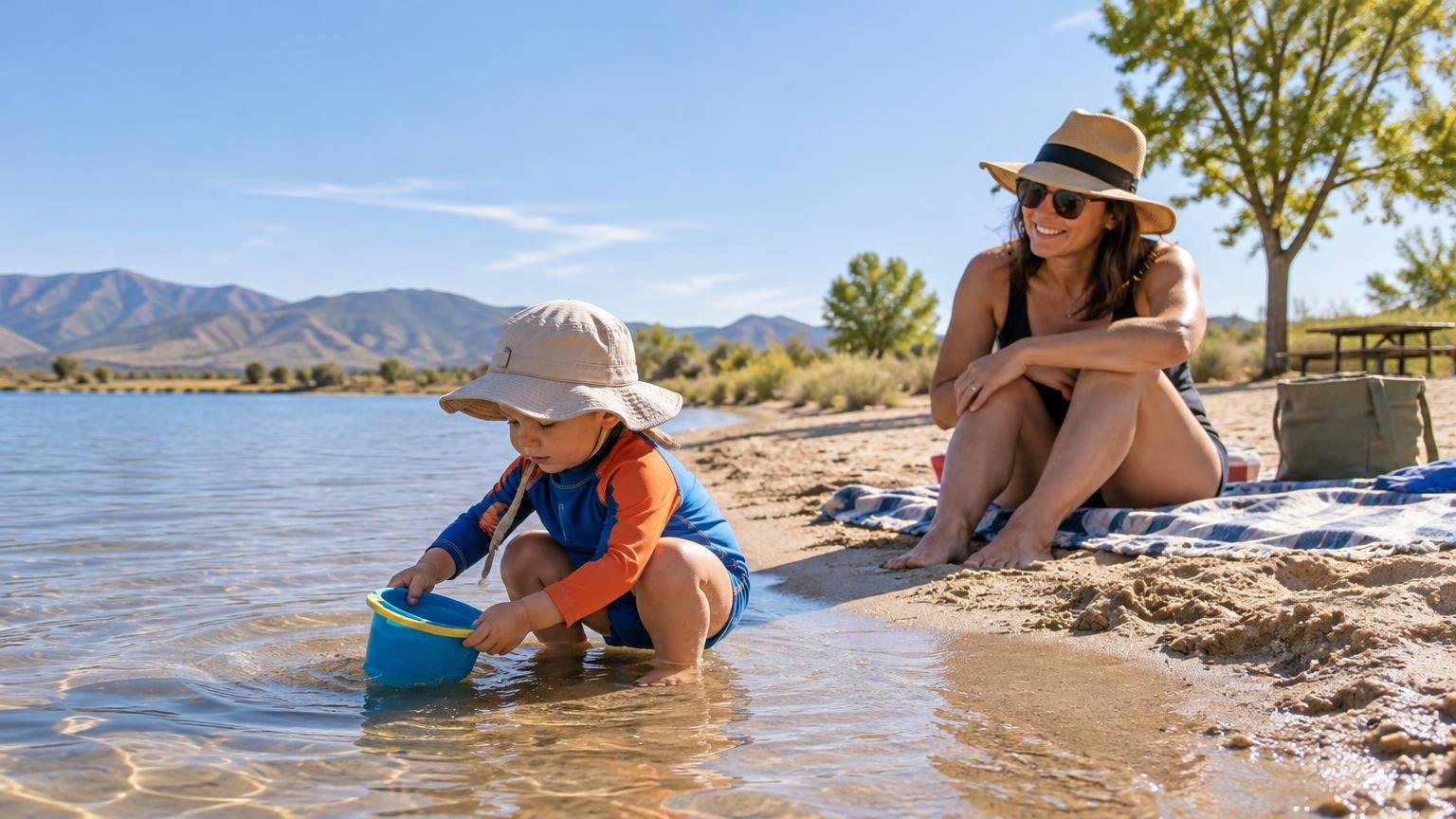
TLDR: Utah Lake State Park is the most practical first choice for many Utah County families because it combines beach access with a playground, picnic space, restrooms, showers, drinking water and shade. Rock Cliff at Jordanelle is the stronger choice for a short nature outing, Hyrum works well for a Cache Valley swim day, Sand Hollow suits a planned southern Utah beach day, and Goblin Valley offers memorable desert exploration without requiring a long hike. Always check the individual park page, weather and water alerts before leaving.
The best Utah state parks for toddlers are not necessarily the parks with the grandest scenery. With a one-, two- or three-year-old, a good outing usually has a short distance between the car and the main activity, somewhere to eat, a realistic bathroom plan and an easy way to leave when everyone has had enough.
Your home base matters just as much as the attraction. A simple beach near home can be more enjoyable than a celebrated destination reached after hours in the car. Treat these as picks for different regions and toddler-day needs rather than a universal statewide ranking.
Quick picks by toddler-day type
| Toddler-day goal | Best fit | Planning reality |
|---|---|---|
| Easy first lake outing | Utah Lake State Park | Developed facilities and multiple activity options provide useful backup plans. |
| Brief nature walk | Rock Cliff at Jordanelle | Wetland boardwalks offer a focused outing without committing to a long hike. |
| Cache Valley swim day | Hyrum State Park | Use the designated swim beach and confirm current facility conditions. |
| Southern Utah sand-and-water day | Sand Hollow State Park | Plan around heat, boating activity, seasonal hours and current alerts. |
| Imaginative desert stop | Goblin Valley State Park | Short exploration is possible, but stairs, uneven ground and exposure require close supervision. |
| Planned weekend at a lake | Bear Lake State Park | Beach access is seasonal and weather-dependent in some areas. |
Utah Lake State Park: an easy water-and-play day
Utah Lake State Park is the most flexible option on this list for families based in or near Utah County. The park lists swimming and beach access alongside a playground, picnic tables, restrooms, showers, drinking water, shade shelters and a visitor center. It also lists a personal flotation device borrowing station. Hours and vehicle day-use charges vary by season, so consult the official Utah Lake State Park visitor information before departure.
That mix makes the park a practical choice for a toddler’s first lake outing. A family can try the shoreline, retreat to a shaded table for lunch or switch to the playground if the water is too cold or the toddler simply loses interest. Still, “easy” does not mean predictable. Wind, temperature, shoreline conditions and water advisories can change the experience.
Utah State Parks posts harmful-algal-bloom warnings and advisories on individual park pages and at park entrances when applicable. Check before every water visit, not just at the beginning of summer, and keep children and pets out of water affected by an advisory. Review Utah State Parks’ harmful algal bloom information as part of the same-day check.
Families comparing several shoreline options can also use this guide to Utah reservoir beaches for families, which focuses more closely on sand, shade and water access.
Rock Cliff at Jordanelle: wetlands and a short nature outing
Rock Cliff, on the eastern side of Jordanelle State Park, is a good match when the goal is looking, listening and wandering rather than swimming. Utah State Parks describes elevated boardwalks and maintained trails through wetlands toward the Provo River inlet. That gives toddlers a changing sensory landscape—water, reeds, birds and moving leaves—without requiring a major hiking objective.
Do not interpret “boardwalk” as a guarantee that the complete outing is stroller-accessible. Surfaces, transitions and temporary conditions can matter. Check current accessibility information with the park, and bring a carrier if your child may stop walking far from the vehicle.
The nearby Three Rocks Trail is listed as a 0.7-mile round trip with 150 feet of elevation gain. That may be manageable for an energetic preschooler with help, but it is a different proposition from letting a new walker explore near the boardwalk. Rock Cliff fees also vary between peak and off-season periods.
Hyrum State Park: a Cache Valley swim-beach day
For families in Cache Valley, Hyrum State Park offers a designated swim beach reached by a pedestrian-only footpath. Swimming is prohibited around the courtesy docks and boat-ramp area, so use the designated area rather than choosing shoreline based only on where parking appears convenient.
This is best treated as a focused beach outing: arrive with a change of clothes, towels, food, sun protection and a clear plan for constant adult supervision. A toddler standing in shallow water can still lose balance quickly, and reservoir bottoms may change underfoot.
Published day-use prices differ between weekdays and weekends or holidays, while facility conditions can change. Check Hyrum’s current-conditions page as well as its fee page before loading the car.
Sand Hollow State Park: a deliberate southern Utah beach day
Sand Hollow can deliver the classic red-rock-and-blue-water outing, but it rewards more planning than an improvised afternoon stop. The park operates year-round with seasonal hours, and its alert page carries water-related and other notices that should be checked before a beach day.
Developed facilities are one reason families may consider it for a longer visit. The Westside campground lists flush restrooms, hot showers, paved parking pads, shade cabanas or picnic tables and accessible sites. Those campground amenities should not be assumed to exist at every stretch of shoreline, so choose the exact day-use or camping area before arrival.
Heat is the deciding variable for toddlers. In hot weather, favor an early start, minimize time on exposed sand and keep more drinking water in reserve than you expect to use. The presence of a reservoir does not eliminate desert heat. Boating activity also makes designated recreation areas and active supervision especially important.
Goblin Valley State Park: the best non-water adventure
Goblin Valley is the imaginative choice. Its hoodoos can turn a short outing into a natural maze, fort and make-believe village without requiring a conventional long trail. Utah State Parks describes the Valley of Goblins as a mostly flat, free-roaming formation area, although visitors descend stairs from the picnic-pavilion area. The Three Sisters trail is an easy 250-yard one-way walk.
For a toddler, free roaming should still mean hand-holding or staying within immediate reach. Desert surfaces are uneven, shade is limited and the return includes the same access terrain. A carrier is more realistic than relying entirely on a stroller.
Heat, crowds and flash-flood potential can change the day quickly. Check current conditions and the forecast, avoid exposed exploration during intense heat, and do not enter washes or confined terrain when storms threaten. Families deciding between this park and a more demanding nearby outing can compare Goblin Valley and Little Wild Horse Canyon for a family adventure day. For toddlers, Goblin Valley is generally the simpler objective.
Worth a planned trip: Bear Lake State Park
Bear Lake belongs on the family list, but it is better framed as a planned weekend or overnight possibility than a universally easy stop. Beach and camping access is seasonal and weather-dependent in some areas. Confirm which area is open, what facilities are operating and what the current fee covers before making the trip.
That extra preparation can still be worthwhile for a family that wants the lake to be the main event rather than one activity during a short outing. Build in time for meals, naps and changing weather instead of treating the shoreline as a quick roadside attraction.
Choose by region and trip burden
- Utah County: Start with Utah Lake when convenient facilities and activity backups matter most.
- Heber Valley or Park City area: Choose Rock Cliff at Jordanelle for wetlands and a short nature-centered outing.
- Cache Valley: Use Hyrum for a designated regional swim beach rather than driving across the state for a similar toddler experience.
- Greater St. George: Consider Sand Hollow when you can plan around heat, crowds, operating hours and alerts.
- Central Utah road trip: Use Goblin Valley as the main imaginative stop, with a carrier and weather plan.
- Northern Utah destination weekend: Consider Bear Lake when seasonal access and a longer stay align.
Families starting in Salt Lake City can compare the overall travel burden with other Utah day trips from Salt Lake City. Do not measure burden by mileage alone. Nap schedules, holiday traffic, heat and the distance from parking to the activity can matter more than the number on a map.
What a toddler state-park day costs
Day-use fees are park-specific and can vary by season, day of the week or vehicle residency category. Camping, reservations and special-use activities may cost extra. Because those details change, confirm the amount on the park’s official fee page rather than relying on an old screenshot or social post.
For frequent visitors, Utah State Parks lists a 2026 resident annual day-use pass at $125. It covers the cardholder and up to seven passengers in the same private vehicle for 12 months from purchase, but it does not include camping or special-use fees.
The practical calculation is simple: estimate how many paid visits your household will realistically make, compare those park-specific day-use charges with the pass price, and check whether the places you use accept it for the planned activity. Do not buy it based only on an ambitious summer wish list.
Plan for the season, not just the park
Warm weather makes water inviting, but it also brings stronger sun, crowded shorelines and possible water-quality advisories. At desert parks, an early spring or fall outing may be much easier on a toddler than a summer afternoon. This overview of the best time to visit Utah by season and trip type can help place the park day in a broader calendar.
During winter and shoulder seasons, expect a different tradeoff: cooler conditions and fewer crowds may come with reduced services, closed facilities or limited beach access. Verify restrooms, drinking water, visitor services, road conditions and operating hours for the exact park area you intend to use.
Toddler packing and safety checklist
- More drinking water than the family expects to use, plus easy snacks and a real meal plan
- Broad-spectrum sunscreen, hats and season-appropriate layers
- A complete change of clothes, towels and a waterproof bag for wet items
- Swim diapers where required and ordinary diapers with a portable changing pad
- A properly fitted child flotation device when appropriate for the planned water or boating activity
- A carrier for stairs, sand, uneven paths or a child who may stop walking
- A stroller only after confirming that the intended route and surfaces suit it
- Basic first aid, needed medications and emergency contact information
- A downloaded map or screenshot for areas with unreliable reception
- A willingness to leave when wind, lightning, heat, water conditions or toddler fatigue changes the plan
Common questions from parents
Are these Utah state parks stroller-friendly?
Some developed areas and boardwalk segments may work with a stroller, but the supplied park information does not support calling every featured outing stroller-accessible. Sand, stairs, rough transitions and temporary closures can create problems. Confirm the exact route with the park and keep a carrier as a backup.
Which park is easiest for a toddler’s first lake day?
Utah Lake State Park is the strongest general pick for families near Utah County because the listed playground, picnic facilities, shade, restrooms and showers create alternatives to staying in the water. Hyrum may be easier for a Cache Valley family because a shorter regional trip often matters more than having the longest amenity list.
How do families check algae advisories and closures?
Open the individual park’s official page on the day of the trip and review alerts or current conditions. For water outings, check Utah State Parks’ harmful-algal-bloom information as well. Read signs at the entrance and shoreline, because a condition may have changed after the family started driving.
Which option works outside summer?
Goblin Valley can be an excellent cool-season choice when the forecast is stable, while Rock Cliff can support a nature-focused outing when trails and access are open. Sand Hollow operates year-round with seasonal hours. Water-oriented parks may still be enjoyable for picnics or views, but families should verify which facilities remain available.
Match the park to the day you actually have
Start with the easiest useful outing, not the most impressive destination. Choose Utah Lake for a flexible Utah County water-and-play day, Rock Cliff for wetland viewing, Hyrum for a Cache Valley beach outing, Sand Hollow for a planned southern Utah water day, or Goblin Valley for short desert exploration.
Then perform a same-day check: weather, park alerts, water conditions, hours, fees, restroom status and the exact access point. That five-minute review—and permission to turn around when conditions are wrong—does more for a successful toddler outing than squeezing another attraction into the itinerary.
References
- Utah Lake State Park | Utah State Parks
- Park Fees | Utah State Parks
- Harmful Algal Blooms at Utah State Parks | Utah State Parks
- Things to do | Utah State Parks
- Park Fees | Utah State Parks
- Park Rules and Regulations | Utah State Parks
- Pricing | Utah State Parks
- Current Conditions | Utah State Parks
- Park Fees | Utah State Parks
- Alerts and notices | Utah State Parks
- Camping and Lodging | Utah State Parks
- Hiking and Rappelling | Utah State Parks
- Current Conditions | Utah State Parks
- Goblin Valley State Park | Utah State Parks
- Park Fees | Utah State Parks
- Park Passes | Prod – Utah State Parks